


 Email
Email



 Back to List
Electrification is reshaping braking: when energy recovery takes centre stage


The widespread adoption of new energy vehicles has brought about a quiet yet profound transformation of braking systems. On the surface, electric vehicles may simply appear to have "swapped their power source", but the operating conditions, wear patterns and even the design requirements of braking components are being redefined.
Wear and tear has decreased, yet expectations have risen
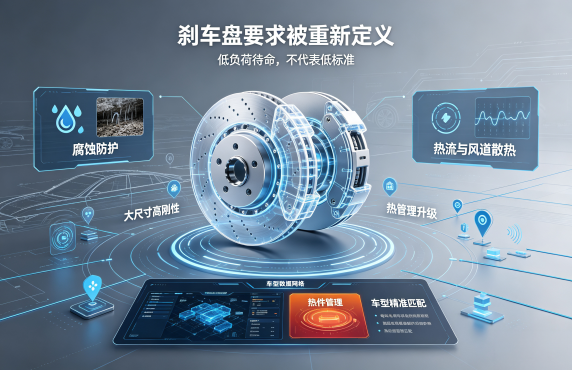
Energy recovery handles the bulk of day-to-day deceleration, resulting in a significant reduction in the rate of wear on brake discs and pads—which is good news for car owners. However, the flip side is that, as braking components remain in a state of "low-load standby" for extended periods, they are more prone to rusting in damp conditions; at the same time, electric vehicles generally have a higher kerb weight, resulting in greater inertia during each braking manoeuvre, which places more stringent demands on the strength and thermal management of the brake discs.
The "single pedal" has changed the way people use it
Single‑pedal driving means that most deceleration is handled by the motor, whilst mechanical braking is used primarily for emergency stops and coming to a complete halt. This usage pattern means that the operating conditions for the braking components are more sporadic and concentrated in moments of high load, making them even more sensitive to the stability of the coefficient of friction and their resistance to thermal fade.
A consensus is emerging within the industry: it is not that electric vehicles "do not require good brake discs", but rather that "brake discs need to be redesigned for new operating conditions". Corrosion protection, large dimensions and high rigidity have become the key terms of the electric vehicle era.
The knock‑on effects on the industrial chain
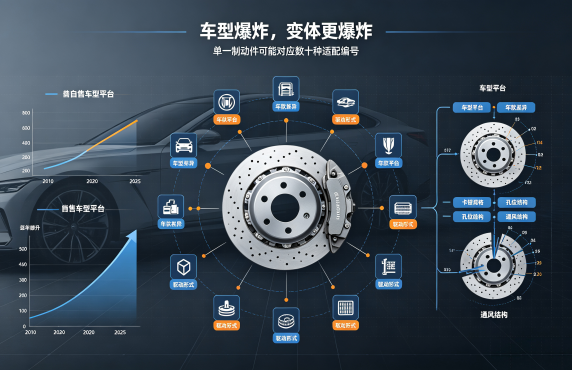
Changes in demand patterns will be passed up the supply chain: OEMs are becoming involved in the selection of braking components for new vehicle models at an earlier stage, whilst the aftermarket faces the challenge of matching parts against a rapidly evolving range of vehicle models and an overwhelming number of compatible part numbers. Suppliers capable of rapidly integrating vehicle model data, an understanding of operating conditions and manufacturing processes will take the lead in this round of restructuring.
Related News