


 Email
Email


 News Center
The Global Automotive Brake Components Industry Landscape: Manufacturing Hubs, Trade Flows and the Next Decade
News Center
The Global Automotive Brake Components Industry Landscape: Manufacturing Hubs, Trade Flows and the Next Decade
 Back to List
The Global Automotive Brake Components Industry Landscape: Manufacturing Hubs, Trade Flows and the Next Decade


Brake discs are among the safety components in a car that are replaced most frequently. From a global perspective, this seemingly traditional metalworking sector is undergoing an ongoing realignment of its supply chain, with the mature aftermarket in North America and Europe at one end, and Asia’s rapidly expanding manufacturing capacity at the other.
The focus of demand remains on mature markets
In terms of the structure of the vehicle fleet, North America and Europe remain the two main pillars of global demand for aftermarket brake discs, thanks to their vast passenger car fleets and high-mileage driving habits. With their well-established distribution channels and clear certification requirements, these two markets are also the primary destinations for the global trade in brake components.

The centre of gravity of manufacturing continues to shift eastwards
On the other hand, the rapid expansion of casting, machining and surface treatment capabilities across Asia has led to the continued concentration of manufacturing operations in regions offering more favourable costs and supply chains. Over the past decade, China has not only been the world’s largest producer and seller of motor vehicles, but has also gradually emerged as a key hub for the export of brake components—operating in parallel with both contract manufacturing for overseas brands and the expansion of its own brands into international markets.
Variables for the Next Decade
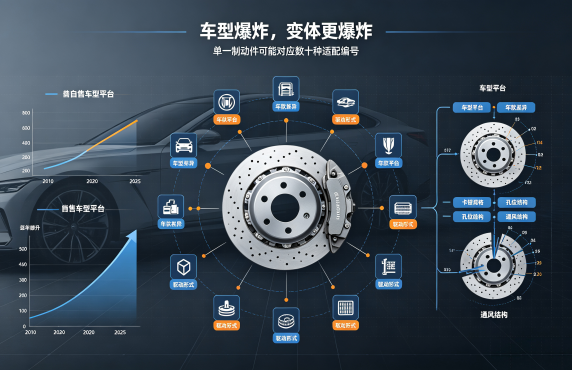
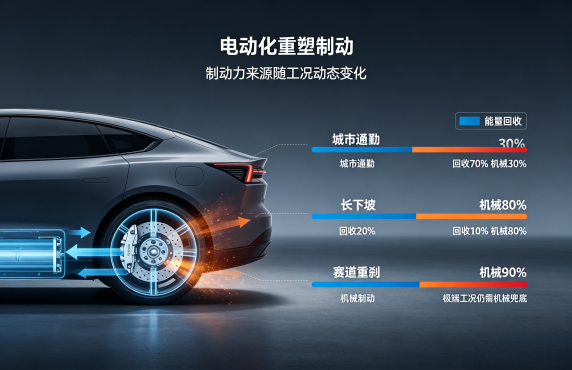
Three trends are reshaping the landscape: firstly, electrification is reducing wear and tear on brake components per vehicle, whilst increasing demand for larger, corrosion-resistant discs; secondly, global trade barriers and the trend towards near-shoring are driving a shift in production capacity from a single, centralised location towards regional decentralisation; thirdly, the digitalisation of the aftermarket has made ‘precise matching by vehicle model’ a new barrier to entry in channel competition. For manufacturers, the mere advantage of production capacity is giving way to a combined capability comprising ‘production capacity + certification + data’.
Related News